
Edition 001 · 25 August 2026 · 2 min. read
Aroma is not created by time alone: How microorganisms contribute to ageing
Ageing flavour is often described through method and number of days. A 2023 study in Foods shows why that explanation is incomplete. Researchers compared beef rump under different post-mortem ageing processes and linked measurable volatile compounds with the dominant bacterial and fungal communities.
Flavour is a network, not merely the result of elapsed days.
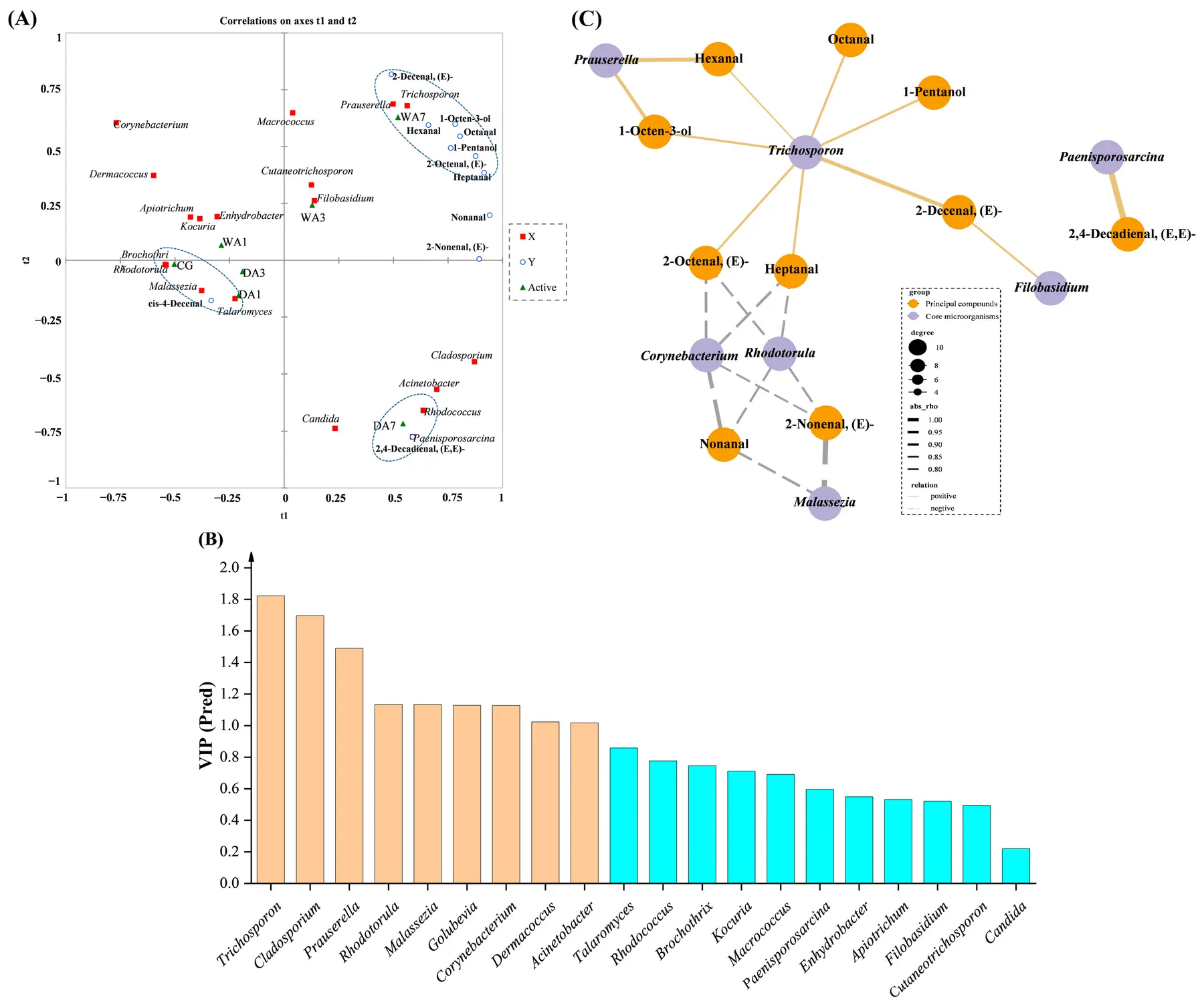
PLSR analysis, VIP scores and the correlation network linking dominant microbiota with eleven key aroma compounds.
The study recorded product quality, volatile compounds and microbiota during wet and dry ageing. Eleven of 65 detected compounds were classified as aroma-active based on their odour activity. Several aldehydes and alcohols, including hexanal, nonanal and 1-octen-3-ol, were particularly enriched in samples wet-aged for seven days. Depending on concentration, these compounds can contribute fatty, grassy, mushroom-like, citrus or fruity notes.
Microbial communities also differed substantially according to ageing method and time. A correlation model identified five genera closely associated with several key aroma compounds. This does not prove that every detected microorganism directly creates a particular flavour. It does show that flavour development is biologically interconnected and cannot be explained by moisture loss or enzyme activity alone.